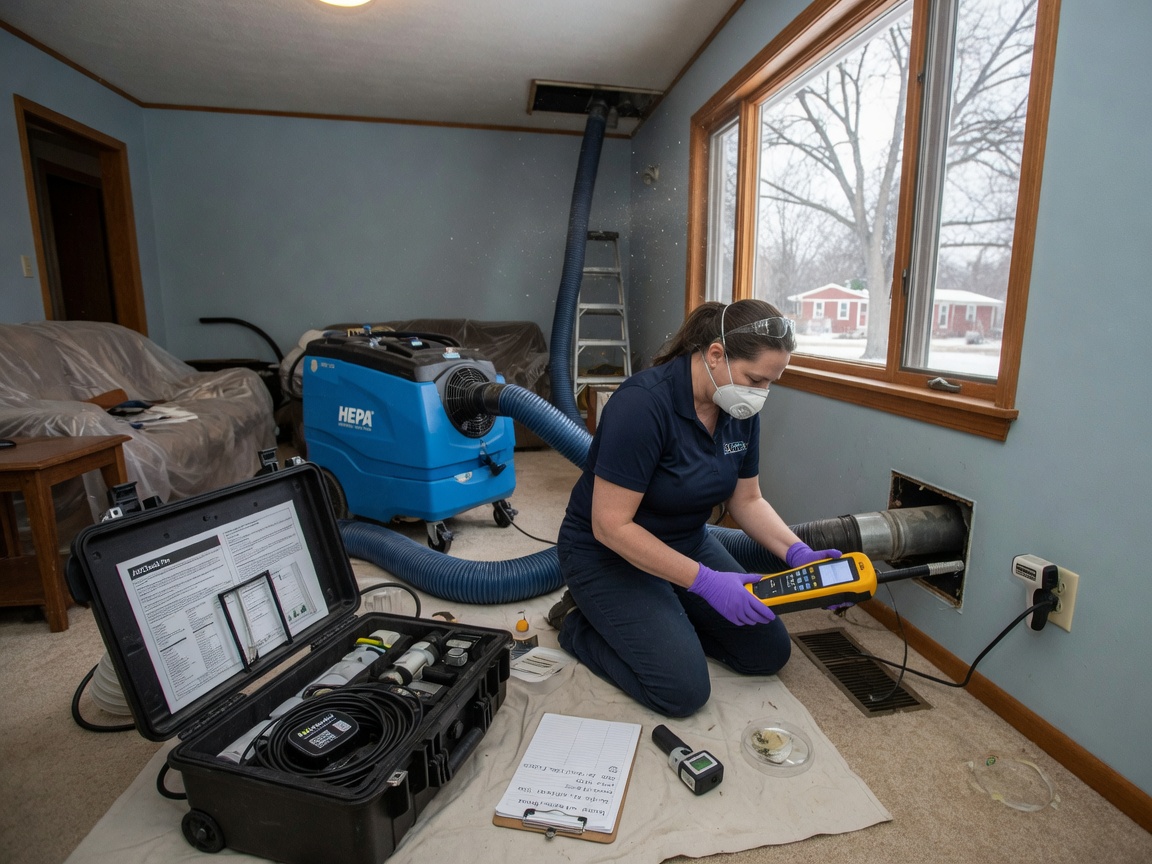
Madison’s humid continental climate brings bone-dry winters that crack woodwork and irritate sinuses, followed by warm, muggy summers that push indoor humidity above 60 percent in many Dane County homes. In neighborhoods such as the Isthmus and Downtown, 80- to 100-year-old houses often have balloon-frame construction and minimal insulation, so moisture and pollutants move freely between floors and attics. We assess actual dew points, measure static pressure in existing duct runs, and check how kitchen and bath exhausts are terminating before recommending any equipment.
Furnaces on the West Side and in Fitchburg frequently short-cycle during January cold snaps, which concentrates dust and reduces filtration effectiveness. Adding a whole-house humidifier or upgraded media filter must be sized to the actual furnace blower speed; oversizing creates condensation on supply ducts in unconditioned spaces. In Sun Prairie and Verona subdivisions with slab-on-grade construction, radon and soil-gas entry points also affect air quality plans, so we coordinate with local testing protocols rather than installing generic filtration alone.
Proper IAQ work in Maple Bluff and Shorewood Hills often requires sealing return-air leaks in crawlspaces or basements where groundwater seepage raises relative humidity. We use mastic and mesh on every joint, then verify airflow with a balometer so the new equipment does not pull unconditioned air from outside. Homeowners notice the difference most during the shoulder seasons when windows stay closed but pollen counts remain high near Olbrich Botanical Gardens and the UW-Madison campus.
Technician insight
In Madison the thing that catches most people out with Indoor Air Quality Solutions is how quickly a 1920s Isthmus balloon-frame house loses humidity once the furnace starts short-cycling in January. They add a humidifier without checking return leaks and end up with moisture on the supply ducts because the blower is pulling cold attic air. We always measure actual static pressure first.
Dry Air And Dust In 1938 Isthmus Home
Homeowners on the Isthmus reported static shocks and visible dust on furniture every winter. We found the original gravity furnace had been replaced with a high-speed unit but the returns were pulling air from an unsealed attic. After sealing the returns and adding a properly sized bypass humidifier, winter humidity stayed between 35 and 45 percent without condensation on the windows.
Indoor Air Quality Solutions Services We Offer
✓Whole House Humidifier Installation
Bypass or power humidifiers matched to furnace output for Madison winters that routinely drop indoor relative humidity below 20 percent.
✓Media Air Cleaner Upgrade
High-efficiency media filters installed in existing plenums to capture fine particles without the airflow restriction common in older Dane County duct systems.
✓Duct Sealing and Insulation
Mastic sealing and exterior insulation on attic and crawlspace ducts to stop conditioned air loss and moisture intrusion in East Side and Monona homes.
✓Bath and Kitchen Exhaust Verification
Airflow testing and termination-point correction so moisture and odors are properly vented rather than recirculated through the HVAC system.
✓Dehumidifier Integration
Whole-house dehumidifiers tied to the existing AC for Fitchburg and Verona homes that see summer humidity spikes above 55 percent even with cooling running.
Indoor Air Quality Solutions Cost in Madison, WI
| Service | Typical Range | What Affects It |
|---|---|---|
| IAQ Assessment | $125–$225 | Includes measurements in heating and cooling modes; credited toward work performed. |
| Whole House Humidifier | $650–$1,100 | Varies with bypass versus power model and whether new water line is needed. |
| Media Filter Upgrade | $350–$650 | Depends on filter size and whether cabinet modification is required. |
| Duct Sealing Package | $400–$900 | Covers accessible runs in attics and basements; more extensive work increases cost. |
Ranges are typical for Madison, WI and confirmed with an exact written quote before any work starts.
How it works
- 1
Initial Assessment
Measure temperature, humidity, and static pressure at multiple points while the system runs in both heating and cooling modes.
- 2
Source Identification
Locate infiltration paths, duct leakage, and exhaust issues specific to the home’s construction and location in Dane County.
- 3
Equipment Selection
Match humidifiers, filters, or dehumidifiers to the furnace and AC capacity already installed.
- 4
Installation And Testing
Install, seal, and re-test airflow and humidity levels to confirm performance across seasonal extremes.
Pricing
Most indoor air quality projects start with an assessment visit; final costs depend on home size, existing duct condition, and which combination of equipment is required.